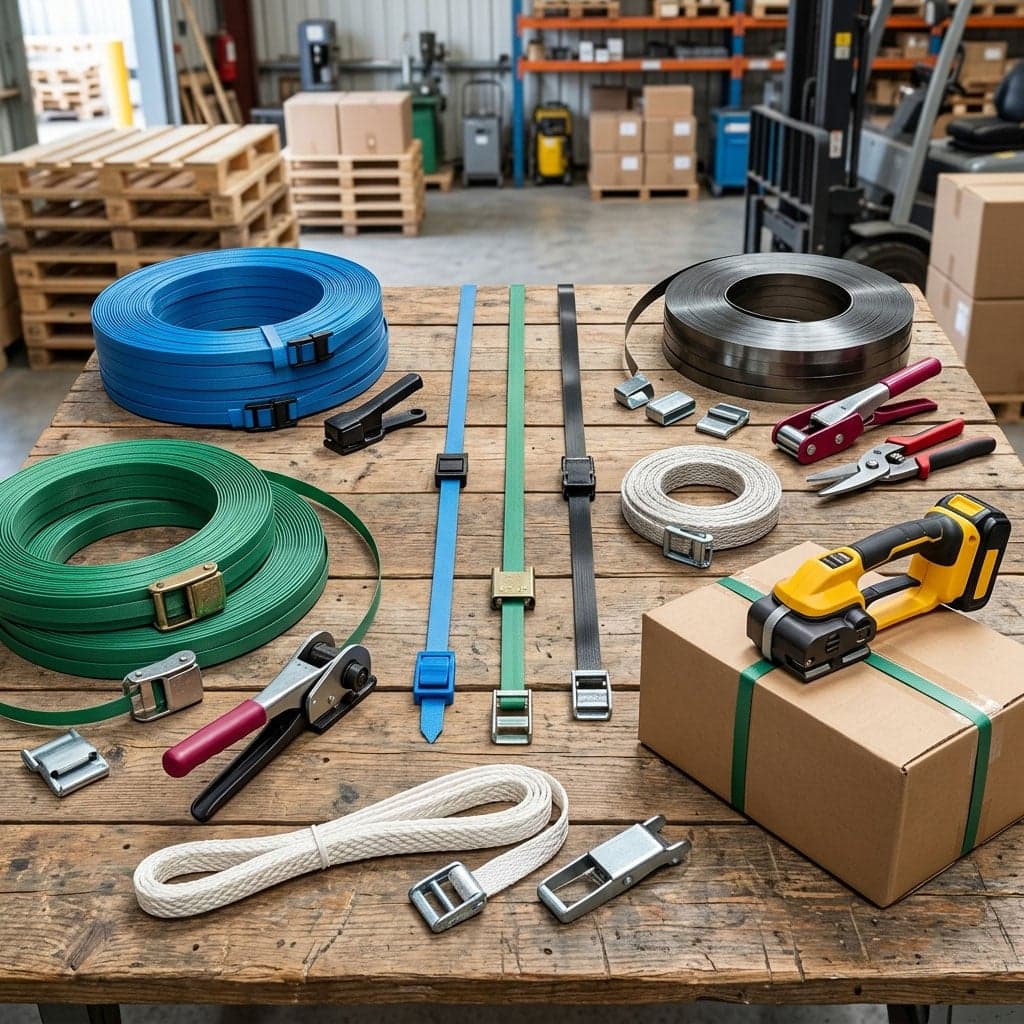
Whether you’re shipping products across the UK or storing heavy loads in a warehouse, choosing the right strapping material is essential for protecting your goods. The correct strapping not only keeps products secure during transit but also reduces damage, improves handling, and ensures every shipment reaches its destination safely.
In this guide, we’ll explore the most common types of strapping materials, their applications, and how to choose the best option for your business.
What Is Packaging Strapping?
Packaging strapping is a strong band used to secure cartons, pallets, bundles, and heavy products during storage and transportation. It helps prevent movement, improves load stability, and protects products from shifting or falling during transit.
Strapping is commonly used in industries such as:
- E-commerce
- Manufacturing
- Warehousing
- Food & Beverage
- Construction
- Logistics
- Retail Distribution
Types of Strapping Materials
1. Polypropylene (PP) Strapping
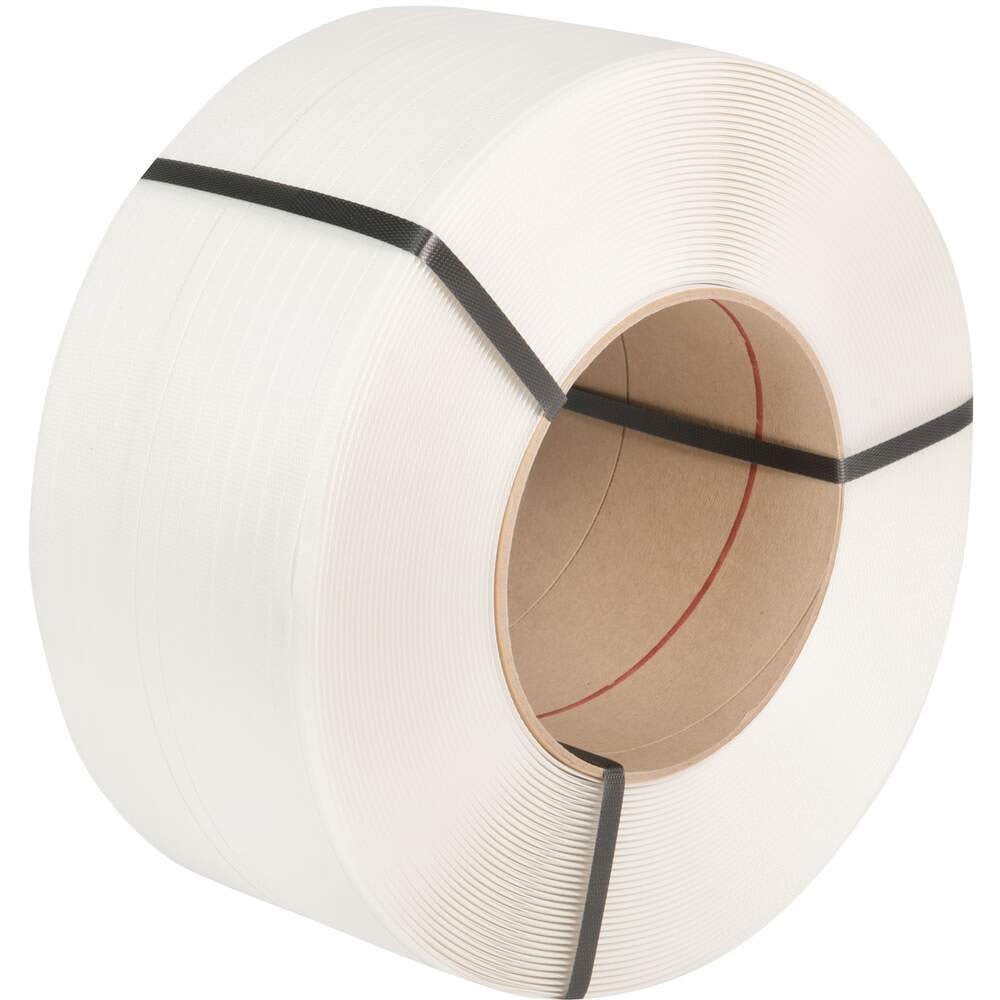
Polypropylene is one of the most popular strapping materials due to its affordability and versatility.
Best for:
- Lightweight cartons
- Parcel shipments
- General warehouse use
- E-commerce packaging
Advantages
✔ Cost-effective
✔ Lightweight
✔ Easy to apply
✔ Suitable for manual and automatic machines
Limitations
- Not recommended for very heavy loads
- Lower tension retention than PET or steel
2. Polyester (PET) Strapping
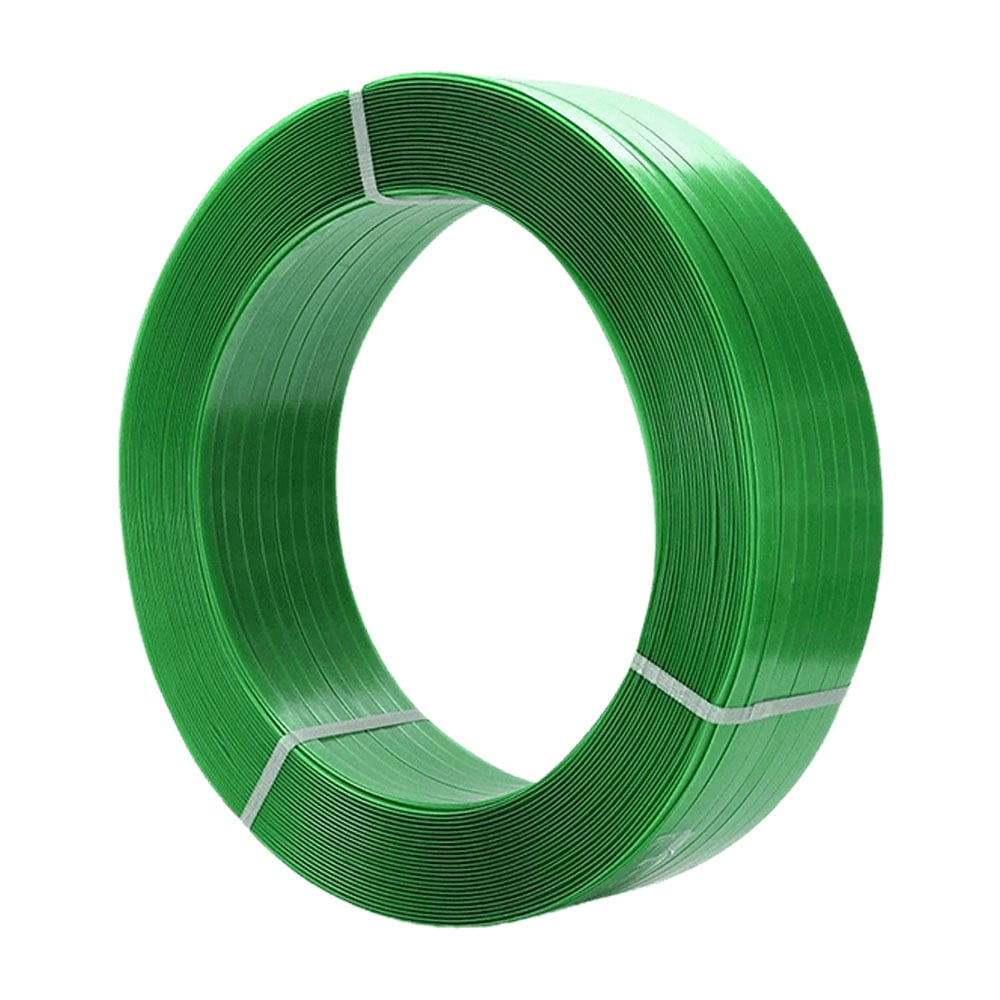
Polyester strapping offers excellent strength and flexibility, making it an ideal alternative to steel.
Best for:
- Heavy pallets
- Brick and timber
- Building materials
- Industrial products
Advantages
✔ High tensile strength
✔ Excellent shock absorption
✔ Rust-free
✔ Weather resistant
✔ Safer than steel
3. Steel Strapping
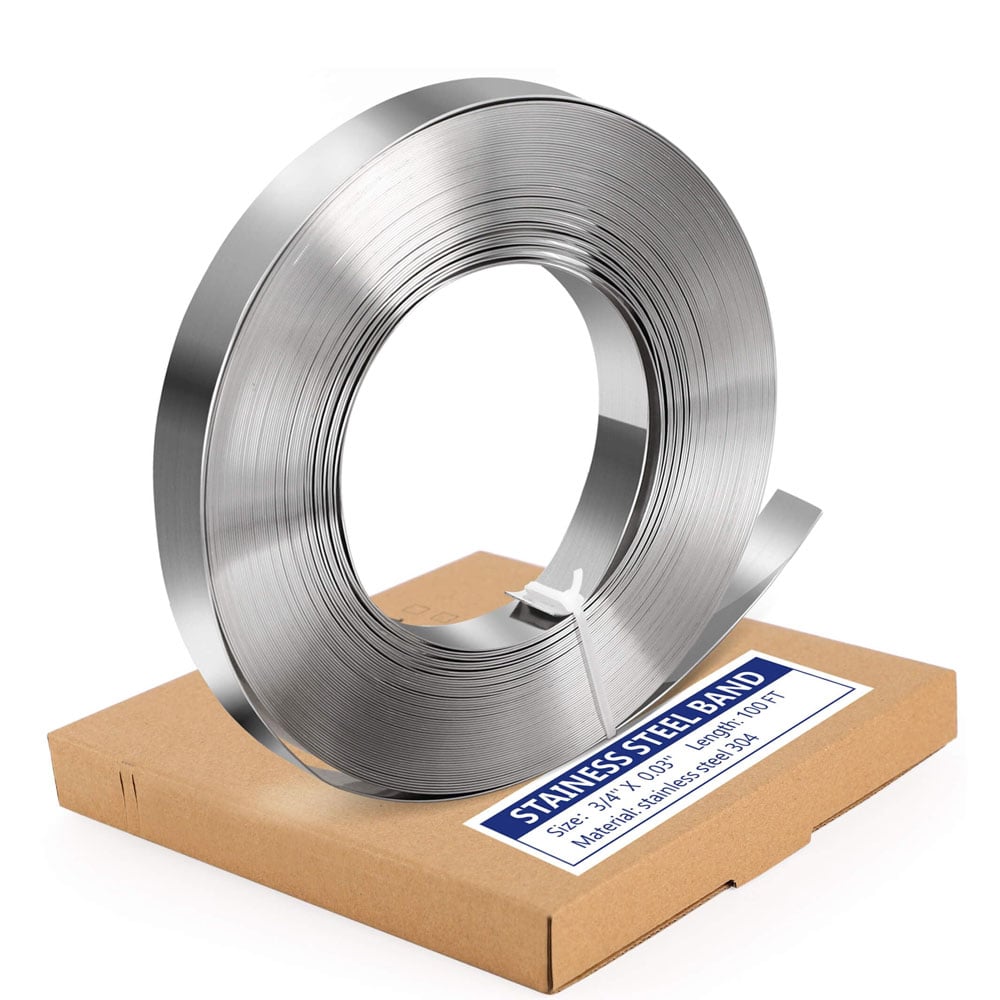
Steel remains the strongest strapping option for extremely heavy or rigid loads.
Best for:
- Steel coils
- Heavy machinery
- Construction materials
- Export shipments
Advantages
✔ Maximum strength
✔ Excellent rigidity
✔ High load security
Considerations
- Can rust
- Sharp edges require careful handling
- Higher cost than plastic alternatives
4. Woven Polyester Strapping
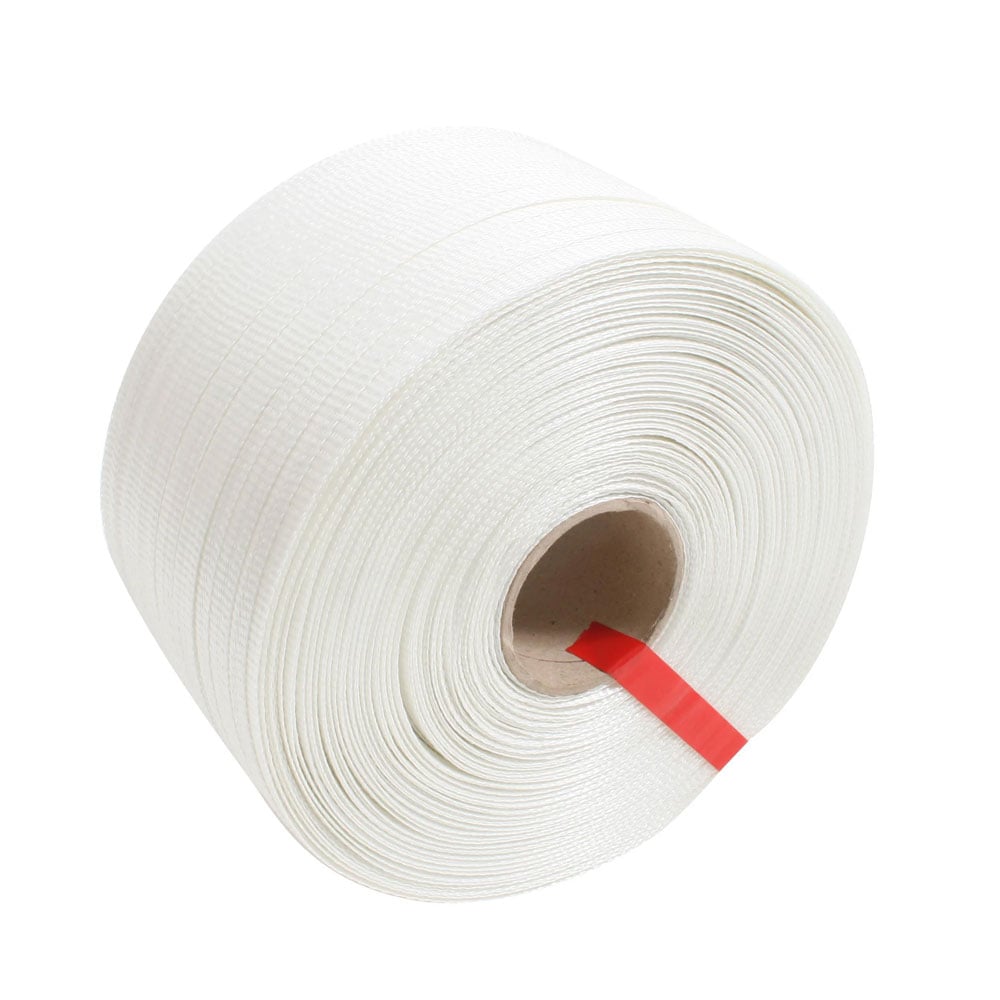
Woven polyester combines flexibility with high strength.
Ideal for:
- Export packaging
- Machinery
- Odd-shaped loads
- Timber
Benefits
✔ Flexible
✔ Easy to tension
✔ Doesn’t damage products
✔ Resistant to weather
Comparing Strapping Materials
| Material | Strength | Flexibility | Best For |
|---|---|---|---|
| Polypropylene (PP) | ★★☆☆☆ | ★★★★★ | Cartons, light packages |
| Polyester (PET) | ★★★★☆ | ★★★★☆ | Heavy pallets, warehouse shipments |
| Steel | ★★★★★ | ★☆☆☆☆ | Machinery, industrial loads |
| Woven Polyester | ★★★★☆ | ★★★★★ | Timber, export goods, irregular loads |
Factors to Consider When Choosing Strapping
1. Load Weight
The heavier the product, the stronger the strapping should be.
- Light parcels → PP
- Medium pallets → PET
- Heavy industrial loads → Steel
2. Transport Distance
Long-distance transport exposes goods to vibration and movement.
PET strapping absorbs shock better than steel, making it ideal for long journeys.
3. Storage Conditions
If products are stored outdoors, choose weather-resistant materials like PET or woven polyester.
4. Application Method
Consider how you’ll apply the strapping:
- Manual tools
- Battery-powered tensioners
- Semi-automatic machines
- Fully automatic strapping machines
Choosing compatible strapping improves efficiency and reduces downtime.
Hand Strapping vs Machine Strapping
Hand Strapping
Suitable for:
- Low-volume operations
- Small businesses
- Warehouse packing stations
Machine Strapping
Ideal for:
- High-volume production
- Distribution centres
- Manufacturing facilities
Machine strapping provides faster application, consistent tension, and improved productivity.
Common Mistakes to Avoid
- Using lightweight strapping for heavy pallets
- Applying too much or too little tension
- Choosing the wrong strap width
- Ignoring storage conditions
- Using damaged or low-quality strapping
Why Quality Strapping Matters
Using the right strapping material can help:
- Reduce product damage
- Improve pallet stability
- Increase workplace safety
- Lower replacement costs
- Speed up warehouse operations
- Enhance customer satisfaction
Investing in quality strapping is often far less expensive than replacing damaged goods or dealing with shipping claims.
Need Help Choosing the Right Strapping?
At UPAC, we supply a wide range of packaging and strapping solutions for businesses across the UK. Whether you need polypropylene, polyester, woven, or steel strapping, our team can help you find the right product for your application.
From small parcel packing to heavy industrial pallet loads, we provide reliable packaging solutions designed to keep your goods secure from warehouse to destination.